What is Adaptability?
HOW TO OVERCOME CONVENIENCE IN PURSUIT OF PRIMAL DEVELOPMENT
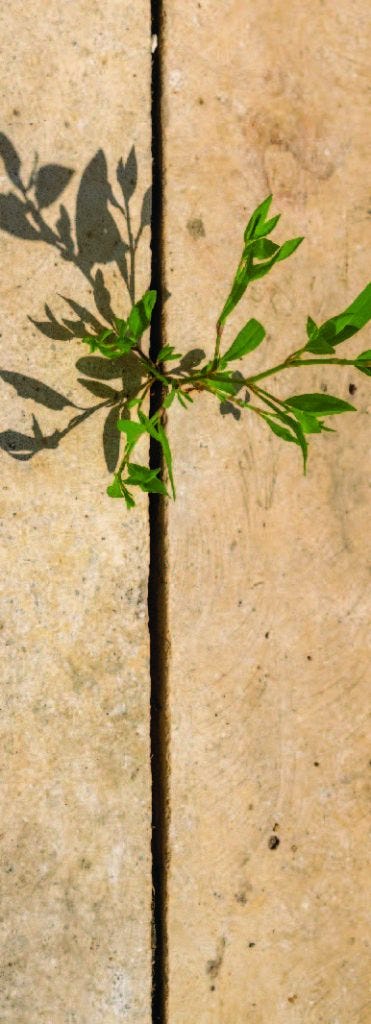
Adaptability is the ability to adjust to different circumstances and conditions—the capacity of an organism to adjust to change.
For many organisms, adapting to change takes long periods of time. The capacity and ability of the organism will dictate how well, how fast, and how much it needs to adjust to fit its changing environment.
Organisms that struggle to adapt will suffer more when encountering rapid change.
Environmental change is the primary motivation for most organisms to adapt, therefore the more gradually change occurs, the easier the process of adaptation will be.
Adaptation is an instinctual mechanism that provides the necessary recipe for change because it is essential to survival.
Due to the slow rate at which adaptation occurs it typically takes several generations to see the effects of changes within an organism. Exposure to change in small increments can encourage an organism’s adaptation, however organisms are not programmed to seek out these changes.
It is therefore difficult to conclude that these organisms—plants, animals, and fungi—get better at adapting, at least in a manner that is easily observable.
Certainly, isolated incidents will show that these organisms can adapt at a rapid pace, but this is typically when they have been removed from their natural environment and have direct human intervention. This would be the case with domesticated livestock, laboratory test animals, house plants, pets and other organisms directly interacting with humans.
It appears that virtually all organisms adapt out of necessity, the only significant exception to this rule being humans.
Technology hurts as much as it helps.
The body is a machine, marvelous in its ability to adapt.
In response to spending hours upon hours staring at a wireless device, the body decides to round the shoulders, shrink the chest, and bend the neck forward; even our thumbs move inward. The result is people of all ages looking like they have been locked in a box for a long period of time. One can only hope that this stays more in the realm of learned behavior than of an actual physical transformation.
With all the technology and information we have at our disposal, we have lost the imminent threat of survival. We have created an environment where adapting can be a second thought, or in many cases no thought at all.
We have also created a phenomenon where adaptation can have negative results on our ability to thrive. One example of this that comes to mind is the medical diagnosis “text neck” syndrome. This seems to occur in people that spend large amounts of time staring at their phone.
Addictive devices have taken a toll on our internal compass and intuition by replacing our need to seek and discover on our own behalf.
We are built to adapt.
Humans are the organism with the most capacity for adaptation; we are intelligent, versatile, creative and capable beings.
We have created a paradigm where adaptation is a choice, not a necessity. We have, in many cases, lost our primal interaction with nature and seem to have hitched up with technology.
How will this impact our future and our ability to adapt?
Convenience is killing us.
Our lust for convenience is likely the designer of our own demise.
As we move further away from our primal existence, we become less resilient and capable.
The comforts and convenience of technology and the modern world allows us to live without much consideration for struggle and sacrifice. We use services that literally bring us cooked ready-to-eat food-like substances without leaving the comfort and security of our own dwelling.
We falsely believe we are safe and secure—that there will be someone willing and waiting to fight on our behalf.
We take comfort in knowing that we can always call the police, so we don’t develop a natural sense of defense.
We have cars and machinery to take us places, so we don’t develop physical strength.
We even have the media telling us how to think, so we can be spoon-fed the questions and answers.
What happens when we don’t adapt?
For most organisms the process of adaptation is one of survival. In our culture, we can skate by for some time without making changes that enhance our existence. Medical advances and increased social programs are not necessarily positive implements for meaningful adaptation.
How to Develop Adaptability
Most of us already possess the necessary tools—intellect, creativity and versatility—to adapt.
Since we are the most intelligent, versatile, and creative beings, we can improve our capacity to adapt in order to thrive.
We can get in touch with our primal connections to the world, we can tune our senses, we can develop skills and techniques, tactics and strategies—we can create a vessel that can adapt to virtually any situation.
The world will throw its weight at the individual at times, and, at others, threaten the entire existence of a species. It is a test that is continuous. The world needs victims.
One of the best ways to become a victim is to stay stuck in destructive patterns, both physically and mentally.
Health and Fitness
There is no downside to oxygenating your brain and body.
Take ownership of your health. There is no better way to move through change than with a functioning, capable body. Challenge yourself both brain and body. Take up activities like Jiu Jitsu that teach powerful exercises for strengthening these skills.
Emotional adaptability
We categorize and assign emotion to every situation—good or bad, right or wrong.
It’s impossible to navigate clearly if we are only looking through an emotional lens. Critical, problem-solving mind skills are essential in quickly-changing crisis environments.
Emotional acuity helps us separate automatic associations from the situation at hand.
Being emotionally sovern is essential in being able to navigate through difficult experiences. We become an emotional liability when we put “how we feel about something” above reasonable and critical thinking.
Having the intestinal fortitude to “stomach” difficult situations and move forward is a sign of strength in adapting.
The calmest mindset is the most adaptable.
Calmness helps you make clearer decisions.
Your response to rapid change doesn’t have to be matched with a chaotic response.
Sometimes you must match energy and turn it up, but that doesn’t mean match chaos for chaos. You can increase movement and put a flame under it, but it can be done with a calm, calculated mind and body response.
Adaptability is the skill and ability to vary between extremes.
Subscribe to our Substack to receive new content automatically
This article is featured in Vol. 5 of The ETHOS Magazine.
Grab a collector's edition of the ETHOS magazine in print HERE.